
Using Drone and Surveillance Footage to Prove Liability in Florida Truck Accident Claims
A commercial truck crash can leave behind evidence that changes quickly. Tire marks fade, debris is cleared, damaged barriers are repaired, vehicles are removed, and traffic returns to normal. Nearby businesses may also record over surveillance footage before the trucking company and its insurer finish their first review of the collision.
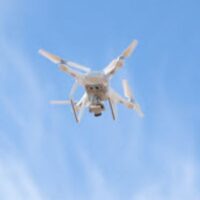
Visual records preserve details that may be gone within days. Drone imagery can capture the roadway from above before the scene changes, while surveillance cameras may show the truck approaching the point of impact. Working with an experienced West Palm Beach truck accident lawyer can help secure footage that shows how the truck moved, what was in the driver’s path, and how the collision unfolded before those details disappear.
Drone Imagery Can Show the Full Crash Scene
Ground-level photographs capture only what is visible from one position. Aerial imagery shows the relationship between lanes, shoulders, medians, barriers, intersections, debris fields, and the locations where the vehicles came to rest.
That wider view can clarify crashes involving tractor-trailer turns, jackknifes, lane departures, underrides, or vehicles forced onto a shoulder. Roadway curvature, grade changes, shoulder width, median placement, and sight distance may also become easier to understand from above.
The size of a tractor-trailer makes scene context especially important. A truck may begin a turn in one lane, cross another, and finish with the trailer occupying a completely different part of the roadway. Drone imagery preserves that larger picture before cleanup and repairs change what remains at the scene.
Photogrammetry Can Create Scaled Measurements
Photogrammetry uses overlapping images to create scaled maps or three-dimensional models of the crash scene. Its role is measurement rather than simple visual documentation.
A reconstructed model can establish the distance between tire marks and an impact point, the width of a lane, the path of a trailer across adjoining traffic, or the space between the truck and a roadside barrier. Elevation changes and roadway curves can also be preserved in a form that allows later measurement.
Large truck crashes frequently extend across long stretches of roadway. Scaled models allow reconstruction professionals to examine stopping distance, travel paths, trailer movement, and available reaction space after the physical scene has been cleared or repaired.
Third-Party Cameras Can Capture the Truck’s Approach
The collision itself does not need to appear on camera for surveillance footage to help establish liability. Gas stations, warehouses, stores, apartment buildings, loading facilities, parking areas, and other properties may have cameras facing nearby roads or entrances.
A recording from several seconds before impact may show the truck drifting from its lane, entering a turn too quickly, failing to slow for traffic, or approaching an intersection without braking. A camera farther back along the route may capture the truck before the dangerous movement began.
Multiple camera angles can also fill gaps in one another. One recording may show the truck entering a block while another captures the final approach. In a West Palm Beach truck crash, those separate views can establish a continuous picture of the truck’s movement without relying on the driver’s later account.
Preservation Requests Can Prevent Overwritten Footage
Many security systems record continuously and overwrite older footage after a set retention period. Useful video may disappear while the insurance claim is still in its earliest stages.
Retention practices differ. A nearby business may automatically replace older recordings after several days. A fleet system may save only clips triggered by hard braking, impact, or another event. Footage may also be stored by an outside vendor rather than on the truck or company server.
A preservation request should identify the crash date, approximate time, camera location, and recording period that needs to be retained. Acting quickly can keep footage from disappearing through ordinary system operation before anyone has had a chance to evaluate what it shows.
Discovery Can Reach Company-Controlled Recordings
A trucking company may possess video that no roadside camera could capture. Fleet dashcams, inward-facing driver cameras, warehouse systems, and driver-monitoring platforms may record activity immediately before or during the crash.
Florida Rule of Civil Procedure 1.350 allows parties in litigation to request documents and electronically stored information within the opposing party’s possession, custody, or control. The rule specifically reaches photographs and audiovisual recordings, making it directly relevant when a trucking company or its vendor holds crash footage.
The request should match the system involved. Some platforms save only event-triggered clips. Others retain longer recordings or separate front-facing and driver-facing video. Knowing how the system stores footage helps avoid a production limited to a short segment that leaves out the seconds before the trigger or the period immediately after impact.
Metadata Can Show the History of the File
Metadata sits behind the visible recording. It may show when a file was created, exported, modified, transferred, or generated by a particular device.
That file history can expose gaps in what was produced. A short clip may have been extracted from a longer recording. Sequential file numbers may indicate surrounding clips. Export information may show that footage was copied after the crash rather than preserved in its original form.
Native files retain more of that history than screenshots or converted videos. Keeping the original digital file allows the production to be examined for completeness and helps establish whether anything changed between the original recording and the version eventually produced.
Truck Data Can Be Synchronized With Video
Electronic truck data adds speed, braking, throttle, steering, and timing to what appears on screen. A camera may show brake lights. Event data or telematics may show the truck’s speed and the exact moment braking began.
Matching the sources can reveal the sequence with much greater precision. A visible lane drift may correspond with steering input. A sudden drop in speed may match the first appearance of brake lights. GPS or telematics timestamps may help synchronize recordings from cameras that were not using identical clocks.
Distance measurements from the scene can then be compared with the driver’s response. The synchronized record may show when the danger became visible, how fast the truck was moving, when the driver reacted, and how much roadway remained before impact.
Visual Evidence Can Show the Force Behind the Injuries
Still photographs taken after the vehicles have been separated may not convey the violence of a commercial truck crash. Video may show a smaller vehicle being pushed across lanes, spun into a barrier, struck by the trailer, or carried forward after the first impact.
Those movements can help explain traumatic brain injuries, spinal trauma, fractures, internal injuries, amputations, and permanent nerve damage. A side impact, secondary collision, or prolonged push by a tractor-trailer can place forces on the body that are difficult to appreciate from post-crash photographs alone.
When an insurer minimizes the severity of the impact, footage showing the vehicle’s movement can give the medical findings clearer context. Guidance from a knowledgeable truck accident lawyer in West Palm Beach can help connect that visual record to the injuries caused by the collision.
Contact Smith, Ball, Báez & Prather
If you were injured in a commercial truck crash, valuable footage may exist beyond the police report and photographs taken after the scene was cleared. Aerial imagery and surveillance recordings can preserve details about the roadway and the truck’s movement that may otherwise disappear.
Smith, Ball, Báez & Prather represents people injured in serious truck accident claims throughout West Palm Beach and South Florida. Contact Smith, Ball, Báez & Prather today to speak with a West Palm Beach truck accident lawyer and learn how we can preserve critical visual evidence and pursue full compensation after a commercial truck crash.
Sources:
- Florida Statutes § 90.901 — Requirement of authentication or identification
https://www.leg.state.fl.us/Statutes/index.cfm?App_mode=Display_Statute&URL=0000-0099%2F0090%2FSections%2F0090.901.html - Florida Rules of Civil Procedure — Rule 1.350, Production of Documents and Things and Entry Upon Land for Inspection and Other Purposes
https://www-media.floridabar.org/uploads/2026/04/Civil-Procedure-Rules-04-01-26.pdf - The Florida Bar — Discovery Rules for Electronically Stored Information
https://www.floridabar.org/the-florida-bar-news/discovery-rules-for-electronically-stored-information/ - Federal Aviation Administration — Small Unmanned Aircraft Systems Regulations (Part 107)
https://www.faa.gov/newsroom/small-unmanned-aircraft-systems-uas-regulations-part-107
