

Motorcycle Accidents on Toll Roads and Bridges: Navigating Liability and Jurisdictional Challenges in Florida
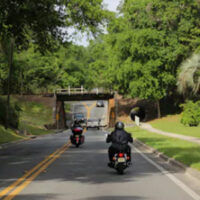
A motorcycle crash on a Florida toll road or bridge can leave an injured rider facing more than the immediate trauma of the collision. These crashes often involve high-speed traffic, narrow shoulders, construction zones, commercial vehicles, electronic toll systems, and public agencies with overlapping responsibilities. What first appears to be a straightforward accident can quickly become a case involving multiple defendants, missing video footage, disputed roadway conditions, and strict government claim requirements.
For riders traveling on Florida’s Turnpike, I-95 express lanes, bridge approaches, or other controlled-access roads, the consequences can be severe. A small road defect or sudden lane obstruction that a passenger vehicle might absorb can throw a motorcyclist into traffic or off the roadway. Working with experienced West Palm Beach motorcycle accident attorneys early in the process can help determine who controlled the roadway, what evidence exists, and how the crash should be investigated before key information disappears.
Why Toll Road and Bridge Motorcycle Crashes Are More Complex
Many motorcycle accident claims begin with a familiar question: who caused the collision? On toll roads and bridges, that question rarely stands alone. A driver may have changed lanes carelessly, followed too closely, or failed to notice a rider. At the same time, traffic flow, lane design, construction activity, roadway lighting, or a maintenance issue may have shaped the circumstances that led to the crash.
These cases require a broader investigation than a standard police report can provide. The relevant evidence may include toll transaction data, traffic management records, roadway inspection logs, maintenance contracts, repair histories, construction plans, incident response records, and surveillance footage.
Crashes near toll plazas, bridge spans, construction zones, or managed lane entrances can also make the physical layout of the roadway central to understanding how the accident happened. The investigation must account for both the collision and the setting, because responsibility may depend on who had the authority to inspect, repair, warn, close lanes, remove debris, or control traffic before the accident.
Identifying Every Potentially Liable Party
The driver who made contact with the motorcycle is not always the only responsible party. A negligent passenger vehicle driver, trucking company, commercial vehicle owner, roadway operator, maintenance contractor, construction company, or public agency may all need to be evaluated depending on the facts.
Florida Statutes § 768.81 makes fault allocation especially important in negligence cases because responsibility can be divided among multiple parties. Florida’s modified comparative fault rule can reduce or bar recovery depending on the percentage of fault assigned. In a motorcycle accident case, defense lawyers and insurers often look for ways to shift blame onto the rider, even when the evidence points to unsafe driving, poor maintenance, or a preventable hazard.
A rider may have been hit by another vehicle, but the surrounding facts can affect how responsibility is divided and how the case is valued. A complete claim looks beyond the point of impact and examines each decision, failure, or hazard that contributed to the crash.
Government Liability Requires Early Attention
When a toll road, bridge, or roadway is operated or maintained by a public entity, the case may involve Florida’s sovereign immunity statute. Florida Statutes § 768.28 allows certain negligence claims against the state, its agencies, and subdivisions, but it also imposes procedural requirements and recovery limitations that do not apply in ordinary claims against private defendants.
Timing and identification matter. A claim involving a state agency, county, municipality, transportation authority, or other public entity requires a close look at who had actual responsibility for the roadway condition or operation at issue. The wrong assumption can create delay, and delay can place key evidence or notice requirements at risk.
Government liability also depends on the nature of the conduct involved. A failure to repair a known dangerous condition, remove debris, replace missing warnings, or maintain a bridge surface may be treated differently from a broad roadway design decision. Records, contracts, inspections, complaints, and prior incidents can show whether the problem was known and whether reasonable steps were taken before the crash.
Private Contractors Can Also Shape the Claim
Not every roadway hazard is solely a government issue. Toll facilities and bridge projects often involve private contractors hired to perform maintenance, repairs, inspections, resurfacing, lighting work, landscaping, debris removal, lane closures, or construction management.
A contractor that created a hazard, failed to follow traffic control requirements, left debris in the roadway, performed incomplete repairs, or ignored a dangerous condition within its work area may become part of the liability picture. Contract documents can show who was responsible for a particular task, but the paperwork alone rarely tells the whole story.
Daily logs, work orders, photographs, employee reports, and communications with the roadway operator may reveal whether the contractor followed its assigned duties. Those records can become important when the roadway owner and private company give different accounts of who handled the work.
Electronic Evidence Can Be Critical
Toll roads and bridges often produce electronic records that can clarify how a crash unfolded. Toll transponder data, roadway surveillance footage, traffic management center records, commercial vehicle telematics, dash camera recordings, and nearby business cameras may help establish vehicle movement, timing, lane position, speed, traffic flow, and the sequence of events before impact.
Some of the evidence can disappear quickly. Video may be overwritten. Electronic records may be retained for limited periods. Incident reports may not capture every camera angle or data point available at the time of the crash. Early preservation requests can make the difference between a case built on objective evidence and one forced to rely on incomplete memories.
For motorcyclists, electronic evidence can also counter unfair assumptions. A rider accused of speeding or unsafe movement may have toll, camera, or vehicle data supporting a different version of events. Objective records can help keep the claim anchored to facts rather than stereotypes.
Roadway Conditions Can Be Especially Dangerous for Motorcyclists
A roadway condition that feels minor inside a passenger vehicle can be dangerous for a motorcyclist. Loose gravel, standing water, steel bridge grates, uneven pavement, deteriorated expansion joints, abrupt lane shifts, poor lighting, or construction debris can affect balance, traction, braking, and visibility.
Bridge crashes deserve particular attention because riders may encounter crosswinds, narrow shoulders, surface transitions, grates, joints, and limited escape routes. Toll-road crashes can also involve sudden congestion near plazas, confusing lane markings, merging traffic, or vehicles making last-second lane changes.
Photographs, repair histories, inspection records, prior complaints, and expert analysis can help explain whether a surface defect, lane pattern, or roadside condition contributed to the loss of control or severity of impact. For an injured motorcyclist, those details can make the difference between a claim focused only on another driver and a claim that reflects the full circumstances of the crash.
Proving the Full Extent of the Rider’s Injuries
Motorcycle crashes on toll roads and bridges often result in catastrophic injuries because of the speed, exposure, and risk of secondary impact. Riders may suffer traumatic brain injuries, spinal cord injuries, multiple fractures, internal injuries, severe road rash, amputations, permanent scarring, or chronic pain that affects work, mobility, and daily life.
Florida Statutes § 627.737 is important in motor vehicle injury claims because it addresses when an injured person may recover damages for pain, suffering, mental anguish, and inconvenience. In serious motorcycle crash cases, the evidence must connect the injury to the statutory threshold, such as permanent injury, significant and permanent loss of an important bodily function, significant and permanent scarring or disfigurement, or death.
That proof does not come from a conclusion alone. It is built through medical records, treating physician testimony, diagnostic imaging, surgical history, rehabilitation records, life care planning, vocational analysis, and economic projections. The claim should account for future medical care, reduced earning capacity, assistive devices, home modifications, long-term pain, and the loss of independence that can follow a devastating crash.
Guidance from experienced West Palm Beach motorcycle accident attorneys can be especially important when the case involves catastrophic injuries, disputed roadway conditions, government claim requirements, and multiple entities attempting to shift responsibility.
Contact Smith, Ball, Báez & Prather
Motorcycle accidents on Florida toll roads and bridges demand a careful investigation from the beginning. The case may involve a negligent driver, a dangerous road condition, a public agency, a private contractor, missing electronic evidence, or several of these issues at once. Waiting too long can make it harder to preserve video, document the roadway condition, and build a claim that reflects the full scope of the rider’s injuries.
If you or someone you love was seriously injured in a motorcycle crash on a toll road or bridge, the West Palm Beach motorcycle accident attorneys at Smith, Ball, Báez & Prather can evaluate the facts, investigate the crash, and pursue the compensation available under Florida law. Contact our office today for a free consultation.
Sources:
- Florida Statutes § 768.81 – Comparative Fault
leg.state.fl.us/statutes/index.cfm?App_mode=Display_Statute&URL=0700-0799/0768/Sections/0768.81.html - Florida Statutes § 768.28 – Waiver of Sovereign Immunity in Tort Actions
leg.state.fl.us/statutes/index.cfm?App_mode=Display_Statute&URL=0700-0799/0768/Sections/0768.28.html - Florida Statutes § 627.737 – Tort Threshold; Limitation on Pain and Suffering Damages
leg.state.fl.us/statutes/index.cfm?App_mode=Display_Statute&URL=0600-0699/0627/Sections/0627.737.html - Florida Department of Transportation – Safety Office
fdot.gov/safety/ - Florida’s Turnpike Enterprise
floridasturnpike.com/
