

Intersections Controlled by Flashing Signals: Determining Right-of-Way and Liability After a Collision
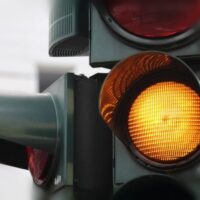
A flashing traffic signal can create confusion in the seconds before a crash. One driver may treat the intersection like a four-way stop. Another may continue through without slowing. A driver facing flashing yellow may believe cross traffic will stop, while the vehicle facing flashing red may enter the intersection too early.
After the collision, each driver may insist they had the right of way. The answer depends on the color of the flashing signal, the order in which vehicles entered, the speed of the approaching traffic, and what each driver did before impact. Working with an experienced West Palm Beach truck accident lawyer can help establish how the signal controlled each approach and which driver failed to respond safely.
Flashing Red and Flashing Yellow Mean Different Things
A flashing signal does not give every driver the same instruction. Florida Statutes § 316.076 requires a driver facing a flashing red signal to stop before entering the crosswalk or intersection and then proceed according to the rules that apply after a stop. A driver facing flashing yellow may proceed through the intersection, but only with caution.
That difference can decide liability. The driver facing flashing yellow generally has the stronger right-of-way position, but still has a duty to approach carefully. The driver facing flashing red must first stop and make sure the intersection can be entered safely.
A collision often occurs when one driver misunderstands that difference. A motorist may treat flashing yellow like a stop sign, creating an unexpected hesitation, or treat flashing red like a yield and roll into cross traffic.
A Flashing Red Signal Functions Like a Stop
The stop requirement at a flashing red signal places the first responsibility on the driver approaching that signal. The vehicle must stop before entering the intersection and remain stopped long enough to determine whether traffic is approaching.
Florida Statutes § 316.123 governs vehicles entering stop or yield intersections. After stopping, the driver must yield to vehicles already in the intersection or approaching closely enough to create an immediate hazard. At a four-way stop, arrival order and the position of vehicles can also affect which driver proceeds first.
That rule becomes important when both drivers claim they entered lawfully. Brake marks, video, witness statements, vehicle positions, and the point of impact can show whether the driver facing flashing red actually stopped and whether it was safe to proceed.
Drivers Facing Flashing Yellow Still Have to Use Caution
A flashing yellow signal allows a driver to continue, but it is not permission to enter the intersection without slowing or watching cross traffic. The driver still needs to account for visibility, traffic speed, pedestrians, turning vehicles, and motorists approaching from the flashing-red side.
Liability can become more complicated when the yellow-side driver is speeding or not paying attention. A driver with the preferred movement can still contribute to a crash by entering too fast to react to a vehicle that has already begun crossing.
That distinction matters in serious crashes involving commercial trucks. A truck approaching a flashing yellow signal at excessive speed may have far less ability to stop once another vehicle enters the intersection. The signal color helps establish right of way, but the truck’s speed and reaction time can still affect responsibility.
Arrival Order Can Matter at Intersections With Multiple Flashing Red Signals
Some intersections switch to flashing red in every direction, particularly during signal outages, late-night operations, or temporary traffic-control conditions. In that setting, the intersection functions much like a four-way stop.
The order in which vehicles arrive becomes important. A vehicle that stops first generally proceeds first. When two vehicles reach the intersection at approximately the same time, the driver on the left must yield to the vehicle on the right under Florida’s stop-intersection rules.
Drivers often remember arrival orders differently after a crash. Nearby cameras, dashcams, witnesses, and vehicle movement can help show which vehicle reached the stop line first and which driver entered out of turn.
Commercial Trucks Need More Space to Stop and Clear the Intersection
A commercial truck can change the dynamics of a flashing-signal intersection. Its size, weight, turning radius, and stopping distance affect how much time the driver needs to react and how long the truck occupies the intersection.
A truck driver facing flashing red may need to stop farther back to see cross traffic clearly before entering. Once the truck begins moving, the trailer may remain in the intersection much longer than a passenger vehicle. A driver facing flashing yellow may have little room to avoid a tractor-trailer that enters unexpectedly.
Those physical characteristics can become important around busy West Palm Beach commercial routes, especially where large trucks mix with turning traffic and limited sight lines. The crash should be evaluated based on the truck’s actual movement and the space available, not only the signal color.
Video Can Show Whether a Driver Actually Stopped
Flashing-signal crashes often turn on a simple factual dispute: did the driver facing red stop before entering?
Video can answer that question directly. Traffic cameras, nearby business surveillance, dashcam footage, doorbell cameras, and recordings from commercial vehicles may show whether the wheels stopped, how long the vehicle remained stationary, and when it entered the intersection.
The footage can also show how the yellow-side vehicle approached. A driver who entered at a steady, reasonable speed presents a different liability picture from a driver who accelerated toward the intersection or never reacted to a vehicle already crossing.
Sight Lines Can Change What Drivers Could See
A legal stop does not always mean the driver had a clear view. Buildings, landscaping, parked vehicles, utility equipment, construction barriers, large trucks, or roadway geometry can obstruct sight lines at a flashing-signal intersection.
A driver facing red may stop at the correct location but then need to move forward cautiously to see approaching traffic. Moving directly into the travel lane without confirming the intersection is clear can create a dangerous conflict.
Sight-line evidence can also answer an insurer’s argument that the crash should have been avoided. Photographs, measurements, scene diagrams, and video can show how much of the approaching roadway was visible from the driver’s position before entry.
Signal Malfunctions Can Create a Different Liability Dispute
A flashing signal may be intentional, but it can also result from a malfunction, power interruption, damaged controller, or temporary traffic-control condition. Drivers arriving at the intersection may not know why the signal is flashing.
The first task is to determine what each signal was displaying when the collision occurred. Maintenance records, signal-controller information, police reports, service calls, and traffic camera footage can help confirm the condition.
A malfunction does not automatically shift responsibility away from the drivers. Each motorist still has to respond to the signal being displayed. A documented equipment problem, however, can become important if the signal operation itself created conflicting or misleading instructions.
Serious Injuries Can Follow Side-Impact Intersection Crashes
Flashing-signal collisions often involve one vehicle entering the path of another, creating a side-impact or angled crash. Those impacts can cause traumatic brain injuries, spinal injuries, fractures, internal injuries, shoulder damage, nerve injuries, and permanent pain.
Commercial vehicles can make those injuries even more severe. A passenger vehicle struck broadside by a truck has less structure between the occupant and the point of impact, while a truck entering the intersection can push a smaller vehicle into another lane, curb, barrier, or vehicle.
Guidance from a knowledgeable West Palm Beach truck accident lawyer can help connect the signal rules, vehicle movement, and injury pattern when an insurer disputes who had the right of way.
Contact Smith, Ball, Báez & Prather
If you were injured in a crash at an intersection controlled by flashing signals, the color of each signal and the way the vehicles entered the intersection can determine who was responsible. Video, witness accounts, vehicle positions, sight lines, and signal records can help establish what happened before impact.
Smith, Ball, Báez & Prather represents people injured in serious truck accident claims throughout West Palm Beach and South Florida. Contact Smith, Ball, Báez & Prather today to speak with a West Palm Beach truck accident lawyer and learn how we can pursue full compensation after a flashing-signal intersection crash.
Sources:
- Florida Statutes § 316.076 — Flashing signals
leg.state.fl.us/statutes/index.cfm?App_mode=Display_Statute&URL=0300-0399%2F0316%2FSections%2F0316.076.html - Florida Statutes § 316.123 — Vehicle entering stop or yield intersection
leg.state.fl.us/Statutes/index.cfm?App_mode=Display_Statute&Search_String=&URL=0300-0399%2F0316%2FSections%2F0316.123.html
