

Pedestrian Injuries Caused by Road Rage or Aggressive Driving in Florida
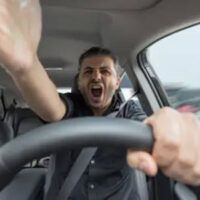
A driver weaving through traffic, accelerating through an intersection, tailgating another vehicle, or ignoring a signal can put everyone nearby at risk. For a pedestrian, there is little protection when that aggression spills into a crosswalk, sidewalk, parking-lot entrance, or roadside shoulder. A moment of anger behind the wheel can leave someone facing fractures, traumatic brain injuries, spinal damage, internal injuries, or permanent limitations.
Pedestrian crashes involving road rage often begin before the driver reaches the person who is eventually struck. Speeding, tailgating, abrupt lane changes, or an escalating confrontation can explain why the driver entered a crosswalk or intersection without enough control to avoid the collision. The conduct leading up to the impact can be just as important as the final seconds before the pedestrian is struck. Working with an experienced West Palm Beach pedestrian accident lawyer can help keep that full sequence at the center of the claim.
Aggressive Driving Often Develops Before the Pedestrian Is Struck
Florida law specifically recognizes a form of conduct called “aggressive careless driving.” Florida Statute § 316.1923 applies when a motorist commits at least two identified traffic violations simultaneously or in succession. The listed conduct includes speeding, unsafe lane changes, following too closely, failing to yield, improper passing, and violating traffic-control devices.
Unfortunately, a pedestrian collision can occur during that sequence. A driver may accelerate to pass another vehicle and enter an intersection too quickly to yield at a crosswalk. Another motorist may make an unsafe lane change, speed through a turn, or disregard a traffic signal while trying to stay ahead of another vehicle.
By the time the pedestrian is struck, the dangerous driving may already have continued through several lanes, turns, or intersections. The collision can become the final event in a much longer episode of aggressive driving.
Road Rage Can Push Driving Beyond Carelessness
Road rage can escalate beyond speeding, tailgating, or unsafe lane changes. Florida Statute § 316.192 defines reckless driving as operating a vehicle with willful or wanton disregard for the safety of people or property.
A driver who races through traffic after an argument, tries to force another vehicle from its lane, or accelerates toward a crowded intersection has already moved well beyond ordinary impatience behind the wheel. The danger increases further when the confrontation continues after pedestrians enter the driver’s path.
Road rage can also be directed at the pedestrian. An argument in a parking area, confrontation in a crosswalk, or earlier encounter can take on a far more serious character if the driver turns the vehicle toward the person or accelerates instead of backing away.
A Driver Focused on Conflict Can Lose Awareness of Pedestrians
Road rage frequently narrows a driver’s attention. Someone concentrating on another motorist may stop scanning for pedestrians, bicycles, signals, or changing traffic conditions.
A driver following another vehicle closely may be watching the vehicle ahead instead of the crosswalk. Someone rapidly switching lanes may have only a brief view of a pedestrian stepping from the curb. A motorist accelerating after an argument can approach an intersection at a speed that leaves little time to respond once a pedestrian is detected.
Florida Statute § 316.130 requires drivers to exercise due care to avoid colliding with pedestrians. A driver consumed by an argument or pursuit still has to account for people entering crosswalks, walking along the roadway, or moving through an intersection.
A driver who spends those critical seconds watching, chasing, or reacting to another vehicle can miss a pedestrian who was already visible. By the time the driver’s attention returns to the roadway ahead, there may be too little distance left to brake or steer away.
Speed Can Turn Aggressive Driving Into a Catastrophic Pedestrian Collision
Speed has an especially dangerous role in pedestrian crashes because the person struck has no vehicle structure, seat belt, or airbag to absorb the impact.
Aggressive driving often brings abrupt acceleration with it. A motorist trying to catch another vehicle, pull ahead after a confrontation, or beat changing traffic can reach a pedestrian crossing at a much higher approach speed. A higher approach speed closes the distance to a pedestrian faster and leaves less room for braking or evasive movement.
The aftermath can include orthopedic trauma, head injuries, spinal injuries, organ damage, extensive road rash, and permanent mobility problems. Serious injuries can require hospitalization, surgery, rehabilitation, home assistance, and extended time away from employment. A pedestrian who survives the initial collision can face months or years of medical treatment and major changes to daily life.
Higher speed also increases the force transferred to the pedestrian at impact. What might have been an avoidable encounter at a lower speed can become a collision involving life-altering injuries.
Evidence of the Driver’s Conduct Can Disappear Quickly
Road-rage incidents often unfold across several blocks or intersections, which means useful evidence may exist far beyond the exact location where the pedestrian was hit.
A nearby business may have recorded the vehicle speeding or changing lanes before the collision. Another driver’s dashcam may show tailgating or an earlier confrontation. A 911 caller may have reported dangerous driving before the crash occurred. Passengers or motorists nearby may have heard horns, shouting, or threats and watched the driver’s behavior escalate.
The vehicle and the driver’s phone can preserve information that witnesses never saw. Vehicle systems may record speed, braking, accelerator position, or other information shortly before impact. Cellphone records may help establish whether the driver was communicating with someone during the confrontation. Police body-camera footage and recorded statements can also preserve details that become harder to reconstruct later.
Video can be overwritten, witnesses can become difficult to locate, and vehicles can be repaired or sold. Once a recording is overwritten or a damaged vehicle is repaired, part of the sequence leading to the crash may be gone for good.
Comparative Fault After an Aggressive-Driving Pedestrian Crash
A driver or insurance company may try to shift attention toward the pedestrian’s conduct. Arguments can focus on where the pedestrian crossed, the traffic signal, visibility, distraction, or whether the pedestrian entered the roadway unexpectedly.
Florida Statute § 768.81 applies modified comparative fault to negligence actions. A claimant’s damages are reduced according to the percentage of fault attributed to the claimant, and an injured party found more than 50 percent responsible for his or her own harm generally cannot recover damages under the statute. Therefore, in cases involving aggressive driving that injures a pedestrian, proving that the injured person could not have appreciated or avoided the defendant’s aggressive driving becomes critical.
Extreme Road-Rage Conduct and Punitive Damages
A road-rage collision involving deliberately threatening or extraordinarily reckless conduct can also raise the possibility of punitive damages.
Florida Statute § 768.72 requires a claimant to make the statutory showing before punitive damages can be pursued. The statute permits punitive damages when clear and convincing evidence establishes intentional misconduct or gross negligence. Gross negligence is defined to include conduct so reckless or lacking in care that it demonstrates conscious disregard or indifference to the life, safety, or rights of others.
A deliberate attempt to strike a pedestrian, continued pursuit after an escalating confrontation, or conduct showing conscious disregard for people nearby could support a punitive-damages claim when the evidence satisfies Florida’s statutory standard. Ordinary negligence alone does not reach that threshold.
A road-rage collision can leave a seriously injured pedestrian facing an insurance claim built around competing versions of what happened before impact. Early guidance from a West Palm Beach pedestrian accident lawyer can help keep the driver’s full course of conduct in view.
Contact Smith, Ball, Báez & Prather
A pedestrian injured by an aggressive or enraged driver can face far more than the immediate trauma of the collision. Hospital care, surgery, rehabilitation, lost income, and uncertainty about long-term recovery can arrive while questions remain about why the driver acted so dangerously in the first place.
Smith, Ball, Báez & Prather represents pedestrians injured in serious traffic accidents in West Palm Beach and throughout Palm Beach County. Contact us to speak with an experienced West Palm Beach pedestrian accident lawyer and learn how we can help pursue compensation for the injuries and losses caused by an aggressive-driving or road-rage collision.
Sources:
- Florida Legislature, Florida Statute § 316.1923 — Aggressive Careless Driving
leg.state.fl.us/Statutes/index.cfm?App_mode=Display_Statute&URL=0300-0399/0316/Sections/0316.1923.html - Florida Legislature, Florida Statute § 316.192 — Reckless Driving
leg.state.fl.us/statutes/index.cfm?App_mode=Display_Statute&URL=0300-0399/0316/Sections/0316.192.html - Florida Legislature, Florida Statute § 316.130 — Pedestrians; Traffic Regulations
leg.state.fl.us/statutes/index.cfm?App_mode=Display_Statute&URL=0300-0399/0316/Sections/0316.130.html - Florida Legislature, Florida Statute § 768.81 — Comparative Fault
leg.state.fl.us/statutes/index.cfm?App_mode=Display_Statute&URL=0700-0799/0768/Sections/0768.81.html - Florida Legislature, Florida Statute § 768.72 — Pleading in Civil Actions; Claim for Punitive Damages
leg.state.fl.us/statutes/index.cfm?App_mode=Display_Statute&URL=0700-0799/0768/Sections/0768.72.html
