

Nighttime Pedestrian Accidents in West Palm Beach: Visibility, Lighting, Speed, and Driver Reaction Time
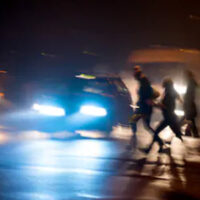
Walking after dark changes the conditions around a pedestrian long before a driver ever enters the picture. Streetlights leave gaps between illuminated areas, headlights provide only a limited field of useful vision, and a person crossing from a darker sidewalk can be harder to distinguish against surrounding traffic, landscaping, parked vehicles, or roadside shadows. When a pedestrian is struck, those visibility conditions can become central to understanding why the driver failed to stop.
The consequences are often devastating because a pedestrian has almost nothing to absorb the force of an impact. A nighttime collision can leave someone facing serious orthopedic injuries, traumatic brain injuries, spinal damage, surgery, prolonged rehabilitation, and months away from work. Working with an experienced West Palm Beach pedestrian accident lawyer can help determine what the driver could reasonably have seen, how much time was available to react, and whether speed or roadway conditions contributed to the crash.
Darkness Can Affect When a Driver First Detects a Pedestrian
A driver cannot react to a pedestrian until the pedestrian is perceived as a hazard. At night, that moment may come much later than it would during daylight. A pedestrian wearing dark clothing can blend into the background, while glare from approaching headlights, illuminated businesses, traffic signals, wet pavement, and other light sources can compete for a driver’s attention.
Federal Highway Administration research into nighttime visibility has examined the relationship between pedestrian detection distances and the time available for drivers to react and brake. That research illustrates an important feature of nighttime pedestrian collisions: visibility and stopping distance have to be considered together. A pedestrian who becomes visible only when a vehicle is relatively close leaves the driver with less roadway in which to recognize the danger, decide how to respond, and bring the vehicle to a stop.
The physical setting can help reconstruct that sequence. Streetlight placement, illuminated storefronts, trees, signs, parked vehicles, medians, intersection geometry, and the direction from which the pedestrian entered the roadway can all affect when the pedestrian would have entered a driver’s usable field of vision. Those details can be particularly important on West Palm Beach roads where pedestrian activity continues well after sunset.
Street Lighting Does Not Necessarily Make a Pedestrian Easy to See
The presence of a streetlight can create an assumption that the roadway was adequately illuminated. The actual scene can be more complicated. A pedestrian may move from a bright area into a darker space between lights, or stand beyond the strongest part of the light cast onto the pavement. Shadows from vegetation, utility poles, buildings, and vehicles can further reduce contrast.
Investigating lighting conditions requires attention to where the pedestrian and vehicle were located during the seconds before impact. Photographs taken in daylight can document roadway geometry, but they may reveal little about what a driver encountered at night. A nighttime inspection under similar conditions can provide a much better picture of the available lighting, surrounding glare, and contrast.
Vehicle lighting also belongs in the analysis. Florida Statute § 316.217 requires vehicles to display the required lights from sunset to sunrise, including twilight hours. Headlight operation, beam selection, condition, alignment, and illumination can affect how far ahead a driver was able to detect a pedestrian. When visibility becomes disputed, those facts can help separate the actual nighttime environment from later assumptions about how bright the roadway appeared.
Speed Reduces the Time Available Before Impact
Speed affects far more than the severity of a pedestrian’s injuries. It also changes how quickly the distance between a vehicle and a pedestrian disappears.
Florida Statute § 316.183 requires drivers to travel at a speed that is reasonable and prudent under existing conditions and actual or potential hazards. It further requires speed to be controlled as necessary to avoid a collision. A posted speed limit therefore does not tell the entire story when visibility is restricted. A driver traveling within the limit can still encounter conditions that require greater caution.
At night, additional speed consumes the limited distance available after a pedestrian first becomes detectable. The vehicle continues moving while the driver recognizes the pedestrian and begins responding, then needs additional distance to slow or stop. NHTSA identifies lower vehicle speeds as a pedestrian-safety measure because reduced speed provides more opportunity for drivers and pedestrians to react and also reduces injury severity when a collision occurs.
That relationship can become especially significant when a driver says the pedestrian “came out of nowhere.” Vehicle speed, sight distance, physical obstructions, impact location, and available lighting can provide a more complete picture of how quickly the situation actually developed.
Driver Reaction Time Begins With Perception
Reaction time is sometimes described as though it begins the instant a pedestrian enters the road. In practice, the more meaningful point is when the pedestrian becomes detectable to the driver.
The process includes seeing the pedestrian, recognizing the developing danger, deciding to brake or steer, physically beginning that response, and then allowing the vehicle itself to slow. FHWA materials addressing stopping sight distance use perception-brake reaction time as a component of the distance required for a driver to stop. Darkness can compress the available margin by delaying the moment when the pedestrian is first recognized.
Distraction can make that margin smaller still. A driver looking toward a phone, navigation screen, passenger, roadside activity, or another vehicle may lose seconds during the very period when the pedestrian becomes visible. Fatigue can also affect nighttime driving, while glare from approaching headlights can temporarily interfere with detecting objects along the roadway.
Reconstruction may therefore focus on more than the driver’s statement that braking began as soon as the pedestrian appeared. Physical evidence can help determine vehicle speed, where braking started, the point of impact, how far the pedestrian traveled after impact, and the distance from which the pedestrian should have become visible under the conditions.
Drivers Still Have a Duty to Watch for Pedestrians at Night
Reduced visibility does not remove a driver’s responsibility to operate carefully. Florida Statute § 316.130 expressly requires drivers to exercise due care to avoid colliding with pedestrians. The same statute also establishes rules governing pedestrian movement, including crossings and compliance with traffic-control devices.
A nighttime claim may turn on the interaction between those responsibilities. A pedestrian crossing outside a marked crosswalk, wearing dark clothing, or entering an area with limited lighting does not automatically answer the question of fault. The driver’s speed, attention, line of sight, opportunity to detect the pedestrian, braking response, and surrounding roadway conditions can remain highly relevant.
Florida’s modified comparative-fault law makes that analysis particularly consequential. Under Florida Statute § 768.81, damages in a negligence action are reduced according to fault attributed to the injured claimant, and a person found more than 50 percent responsible for his or her own harm generally cannot recover. When an insurer argues that darkness, clothing, crossing location, or another pedestrian action caused the collision, the percentage of fault assigned to each person can directly affect the outcome of the claim.
Reconstructing the Nighttime Conditions Can Preserve Critical Evidence
The roadway itself does not remain frozen in the condition that existed on the night of a crash. Streetlights can be repaired, vegetation can be trimmed, construction barriers can move, businesses can change exterior lighting, and damaged vehicles can be repaired or sold. Video from nearby businesses, residences, traffic systems, or vehicles may also be overwritten.
Early investigation can preserve a more accurate picture of the scene. Photographs and measurements can document sight lines and lighting. Surveillance footage may show the pedestrian’s movement or establish traffic flow before impact. Vehicle data can provide information about speed, braking, and other actions immediately before the collision. Witnesses may remember where the pedestrian became visible or whether the vehicle appeared to slow.
Medical records then document another part of the story: what the collision did to the pedestrian. Serious pedestrian injuries often require emergency treatment followed by surgery, therapy, follow-up care, assistive devices, or continuing treatment. Lost earnings and diminished ability to work can deepen the financial strain while the injured person is still trying to regain independence.
When visibility and reaction time are disputed, guidance from a knowledgeable West Palm Beach pedestrian accident lawyer can help connect the physical conditions at the scene with the driver’s actions in the seconds before impact.
Contact Smith, Ball, Báez & Prather
If you or someone you love was struck by a vehicle while walking at night in West Palm Beach, questions about darkness and visibility should not be allowed to overshadow a careful examination of how the collision occurred. Speed, headlights, street lighting, sight distance, driver attention, braking, and the physical layout of the roadway can all help explain what happened.
Smith, Ball, Báez & Prather represents pedestrians and families dealing with the consequences of serious traffic injuries throughout Palm Beach County. Contact the firm to speak with an experienced West Palm Beach pedestrian accident lawyer and learn how we can help protect your right to pursue compensation.
Sources:
- Florida Legislature, Florida Statute § 316.130 — Pedestrians; Traffic Regulations
leg.state.fl.us/statutes/index.cfm?App_mode=Display_Statute&URL=0300-0399/0316/Sections/0316.130.html - Florida Legislature, Florida Statute § 316.183 — Unlawful Speed
leg.state.fl.us/statutes/index.cfm?App_mode=Display_Statute&URL=0300-0399/0316/Sections/0316.183.html - Florida Legislature, Florida Statute § 316.217 — When Lighted Lamps Are Required
leg.state.fl.us/Statutes/index.cfm?App_mode=Display_Statute&URL=0300-0399/0316/Sections/0316.217.html - Florida Legislature, Florida Statute § 768.81 — Comparative Fault
leg.state.fl.us/statutes/index.cfm?App_mode=Display_Statute&URL=0700-0799/0768/Sections/0768.81.html - National Highway Traffic Safety Administration, Pedestrian Safety — Countermeasures That Work
nhtsa.gov/book/countermeasures-that-work/pedestrian-safety - Federal Highway Administration, Enhanced Night Visibility Series
fhwa.dot.gov/publications/research/safety/humanfac/04134/index.cfm
